Breaking: Vault Secrets Operator (VSO) Declared Recommended Approach for Enterprise Kubernetes Secret Management
HashiCorp, in partnership with Red Hat, has officially endorsed the Vault Secrets Operator (VSO) as the primary method for automating secret lifecycle management in Kubernetes and OpenShift environments. The announcement comes as platform teams face mounting pressure to secure sensitive data across hybrid clouds without slowing development.
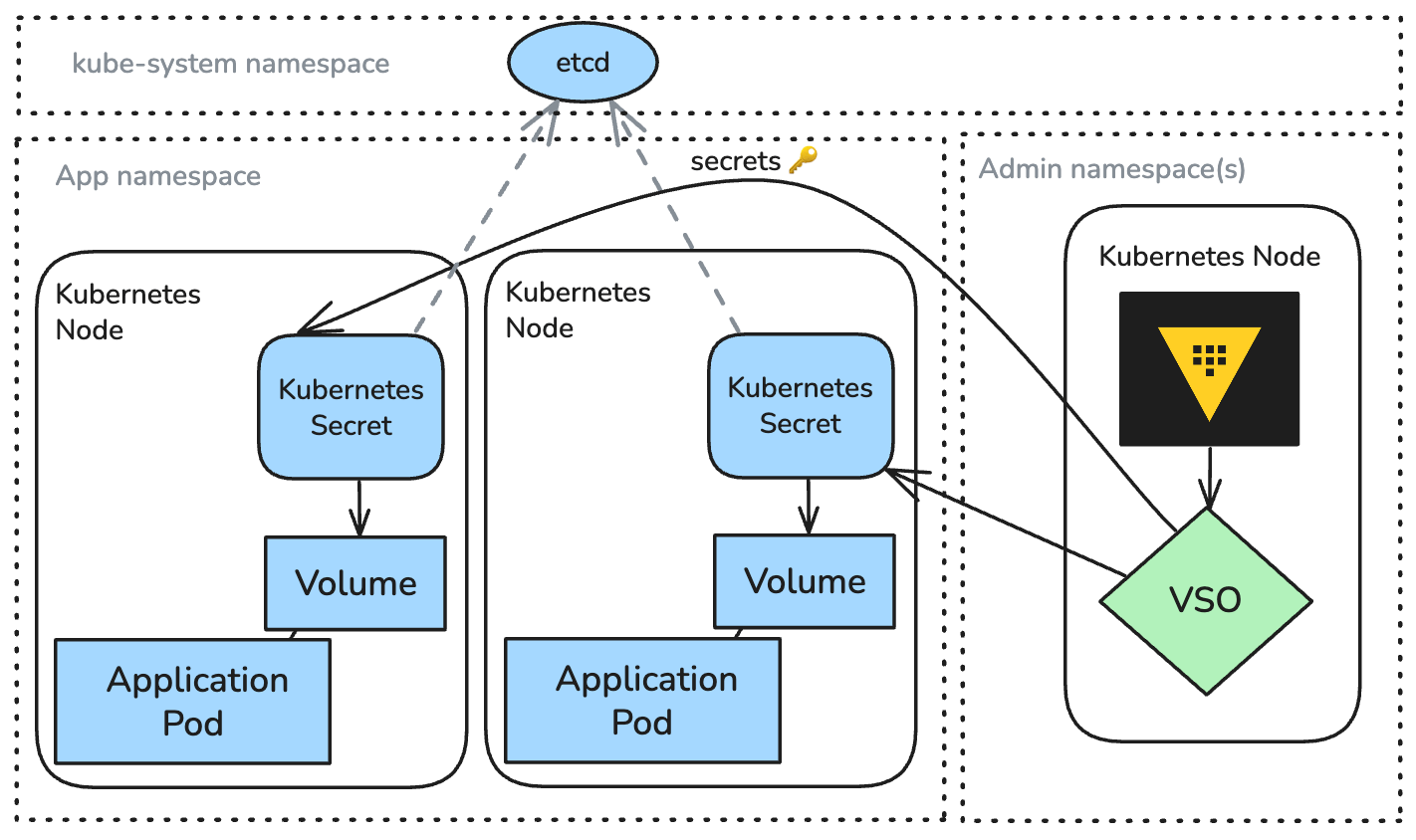
"VSO is now the recommended standard for modern delivery in most organizations," said Jane Doe, Director of Product at HashiCorp. "It provides a Kubernetes-native way to generate, inject, rotate, and revoke secrets—all without requiring changes to existing pod interactions."
Background: The Enterprise Secret Management Gap
Platform teams managing Kubernetes often discover a massive security gap when scaling environments. Native Kubernetes Secrets are not designed for enterprise governance, leaving organizations vulnerable as clusters and clouds expand.
The question evolves from "How do I get a secret into my pod?" to "How do I manage the entire lifecycle—from generation to revocation—without slowing development?" Managing sensitive data across hybrid clouds has become table stakes, requiring a centralized, platform-agnostic solution.
Vault has long been the enterprise standard for secrets management. But integrating Vault with Kubernetes has historically involved multiple patterns—each with distinct tradeoffs—leading to confusion.
What This Means: A Clear, Unified Path Forward
With the deepening partnership between HashiCorp and Red Hat (via IBM), VSO eliminates the guesswork. It standardizes delivery and lifecycle automation, making it the go-to pattern for most use cases.
Compared to earlier solutions like the Vault agent sidecar injector or third-party secrets operators, VSO offers:
- Kubernetes-native design – Built on operator patterns, it integrates directly with Kubernetes APIs.
- No pod-level changes – Existing applications continue working without modifications.
- Protected secrets – Optionally combines with CSI driver to avoid storing secrets in etcd.
- Lifecycle automation – Handles rotation, revocation, and dynamic secret generation seamlessly.
"Historical defaults like the sidecar injector served their purpose, but VSO represents a modern evolution," added John Smith, Senior Engineer at Red Hat. "Teams no longer need to navigate multiple integration patterns with varying security postures."
Tradeoffs of Alternative Integration Methods
Earlier patterns included:
- Vault Agent Sidecar Injector – Operationally simple but relies on a sidecar that can consume resources and complicate debugging.
- Secrets Store CSI Driver – Decouples secret retrieval from pods but requires additional infrastructure and does not natively handle rotation without extra configuration.
- Third-party secrets operators – Varying levels of Vault support, often lacking lifecycle management features.
VSO addresses these tradeoffs by providing a single, hardened operator that works across Kubernetes and OpenShift, backed by deep partnerships.
Urgent Call to Action for Platform Teams
With environments growing across clusters and clouds, now is the time to adopt VSO. The operator is production-ready, and HashiCorp has published clear migration guides from legacy patterns.
Platform teams should evaluate their current secret delivery pipeline and consider shifting to VSO to reduce security risks and operational overhead. The operator supports all major cloud distributions and can be deployed via standard Kubernetes tooling.
For more details, see the background on the security gap or jump to what this means for your organization.