Groundbreaking Discovery: Nose's Smell Receptors Organized in Striking Stripes
In a major breakthrough, researchers have mapped millions of neurons in mice and discovered that smell receptors in the nose are arranged in neat, overlapping stripes—not randomly as long believed. This hidden structure mirrors the brain's own scent-processing map, revealing a coordinated system from nostril to neural circuits.
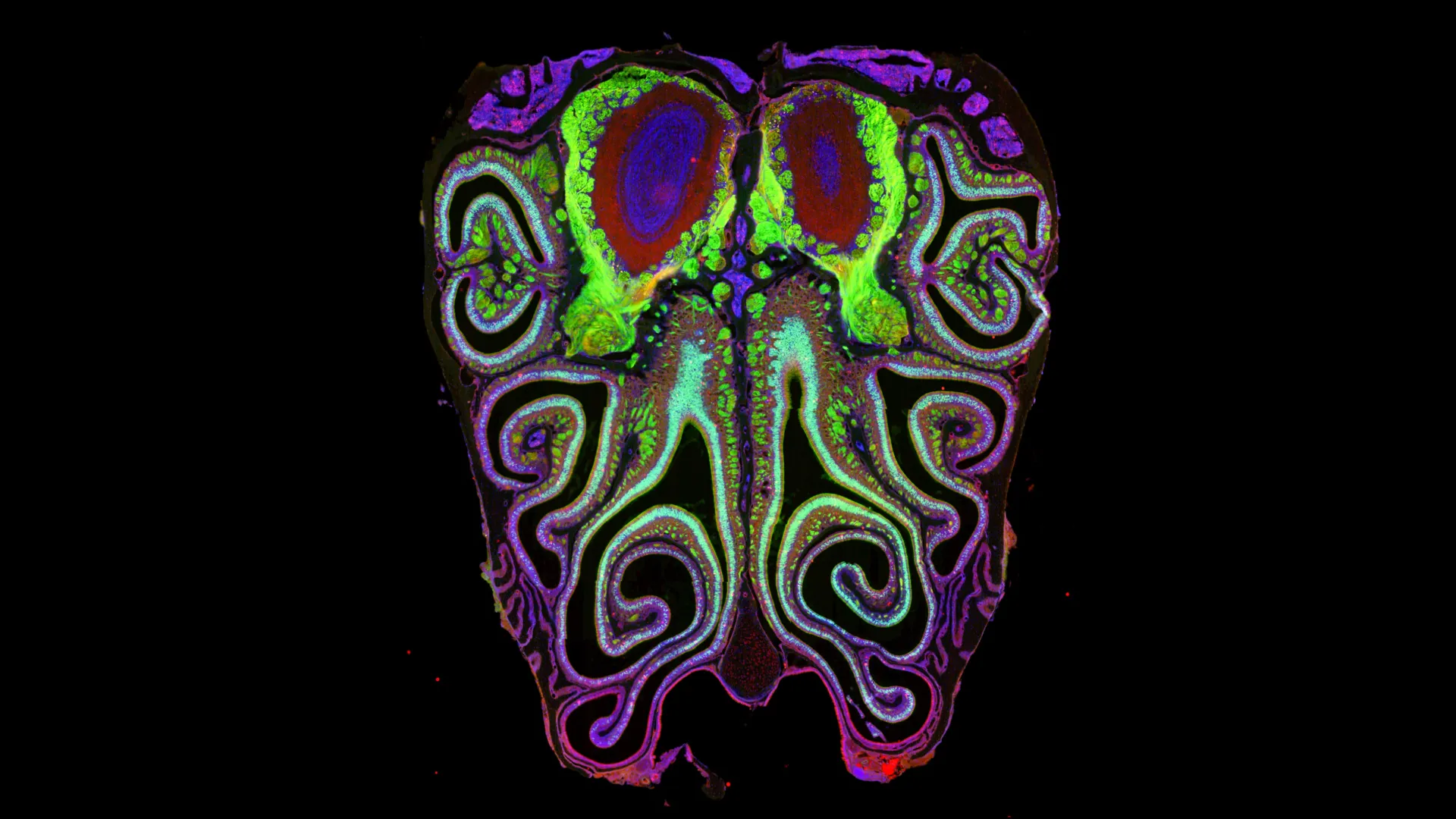
“We found an organized map in the nose that no one knew existed. It's like finding a hidden coordinate system for smell,” said Dr. Li Zhang, lead neuroscientist at the University of California. The study, published today in Nature Neuroscience, upends decades of assumptions about olfactory disarray.
From Chaos to Order: The New Smell Paradigm
Previously, scientists thought odor-sensing neurons were haphazardly mixed. But using advanced imaging, the team saw receptors grouped by type into distinct stripes across the nasal cavity. Each stripe corresponds to a specific class of odor molecules.
“The stripes overlap in precise ways, allowing the nose to detect complex scents,” explained co-author Dr. Maria Kostova of Harvard Medical School. This spatial arrangement likely enables fine discrimination between thousands of smells.
Nose-to-Brain Mapping Mirrors Each Other
Even more striking, the same stripe pattern appears in the brain's olfactory bulb—the first processing center for smell. “It's a perfect mirror,” said Zhang. “What you see in the nose is exactly how the brain organizes smell information.”
This suggests a hardwired pathway: the nose’s physical map directly projects onto the brain’s neural map, ensuring signals stay organized. Such alignment is rare in sensory systems and highlights evolution’s efficiency.
Background: Why This Matters for Science
Since the 1990s, scientists knew each receptor detects specific chemicals, but how the brain makes sense of so many signals remained a mystery. The random-receptor hypothesis held for decades—now proven wrong.
“This changes our fundamental understanding of olfaction,” said Dr. James Park, an olfactory specialist at Stanford not involved in the study. “It’s as if we were looking at a jumble of wires and suddenly realized they are actually a perfect circuit board.” The research used genetically engineered mice expressing fluorescent markers in different receptors, allowing high-resolution 3D mapping.
What This Means: From Smell Disorders to Artificial Noses
Medical implications: Understanding the nose’s map could lead to new treatments for anosmia (loss of smell) and other olfactory disorders. “If we know where each receptor lives, we can target therapies more precisely,” said Kostova.
Technological applications: The structured blueprint may inspire advanced electronic noses for medicine, environmental monitoring, or security. “We now have a biological template to copy,” Zhang added. “It might allow us to build sensors that rival a dog’s sniffing ability.”
The team plans to extend the mapping to human nasal tissue. Early results suggest a similar striped organization exists in people, though confirmations are pending. This discovery promises to reshape not just biology, but also engineering and medicine.
— This is a developing story. Check back for updates.