Breaking News: New Spider Species Found in Urban Walls
A newly discovered spider species, named Pikelinia floydmuraria in tribute to the band Pink Floyd, has been found lurking in the crevices of walls. Despite its small size, this spider is a formidable hunter capable of taking down ants six times its own size.
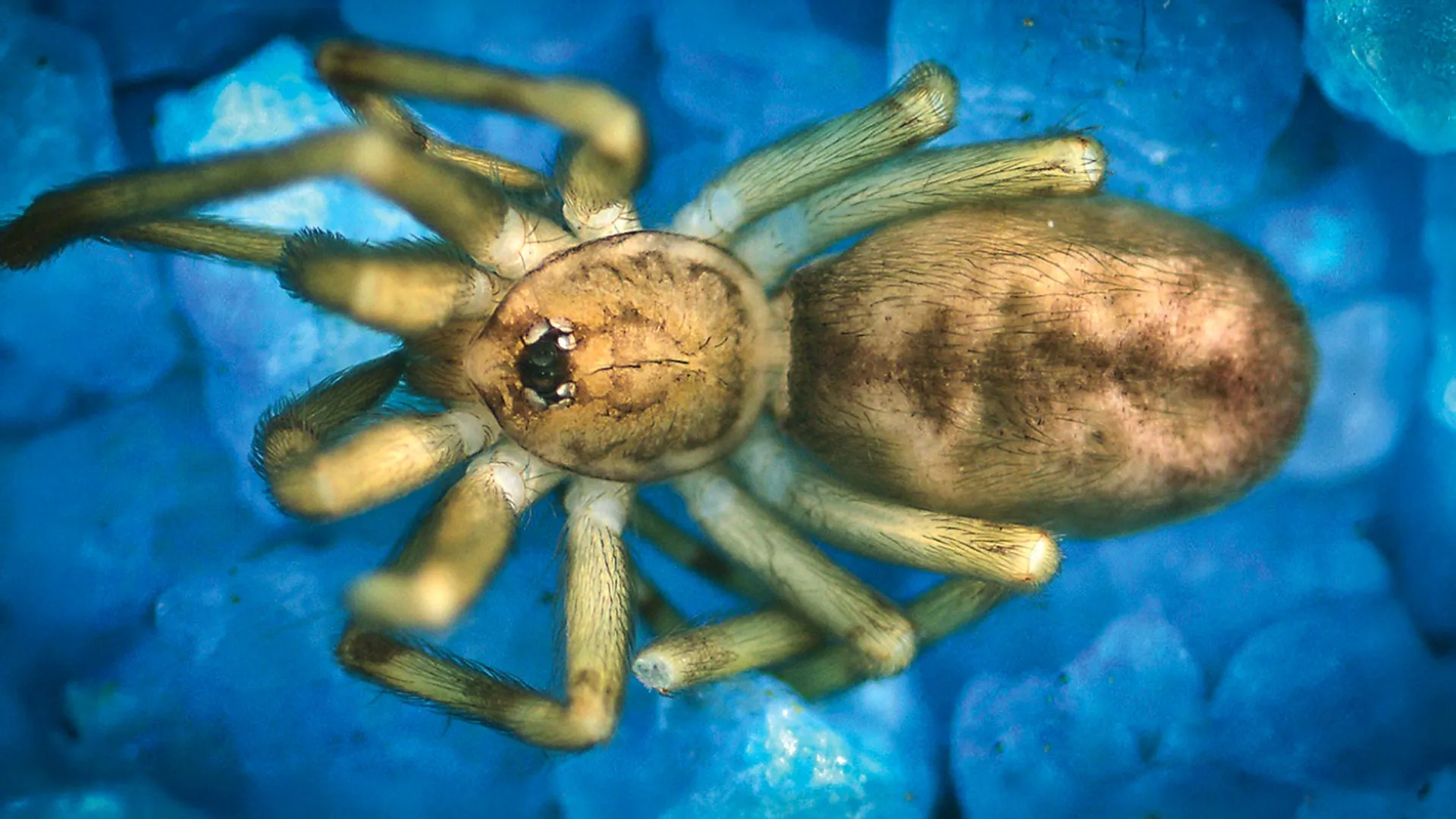
The spider's unique hunting strategy includes building webs near artificial lights, where insects like mosquitoes and flies are attracted. This behavior makes it an effective natural pest controller in urban environments.
Researchers have noted that the spider's ability to prey on such large ants suggests an evolutionary adaptation that may have implications for understanding pest management. “This spider is a tiny powerhouse,” said Dr. Elena Martinez, lead researcher at the University of Buenos Aires. “Its presence in households could significantly reduce common pests without the need for chemicals.”
Background: From Pink Floyd to the Galápagos
The species was identified by a team of arachnologists studying wall-dwelling spiders in Argentina. The name Pikelinia floydmuraria combines the genus Pikelinia with a nod to Pink Floyd's album The Wall and the word murus (Latin for wall).
Interestingly, the discovery has raised new questions about a mysterious connection between this spider and similar species found in the Galápagos Islands. “We are puzzled by the genetic similarities,” commented Dr. Martinez. “It suggests a fascinating evolutionary history that we are only beginning to unravel.”
The team plans to conduct further research to determine how these distant spider populations are linked. This could shed light on ancient dispersal patterns across South America and the Pacific.
What This Means: Urban Pest Control and Evolutionary Biology
The spider's diet includes not only giant ants but also common household pests like mosquitoes and flies. By spinning webs near light sources, Pikelinia floydmuraria capitalizes on the phototactic behavior of these insects.
This natural pest control could reduce reliance on insecticides, especially in densely populated urban areas. “Encouraging such spiders in homes might be a simple, eco-friendly solution,” said Dr. Martinez.
On a broader scale, the genetic link to Galápagos spiders challenges existing theories about how these tiny arachnids traveled across vast oceans. The findings may prompt a revision of biogeographical models for the region.
Researchers urge the public to look more closely at the walls around them. “You never know what extraordinary creature might be living right next to you,” concluded Dr. Martinez.